CM Punjab Minority Card 2026: Online Apply, Eligibility & New Updates
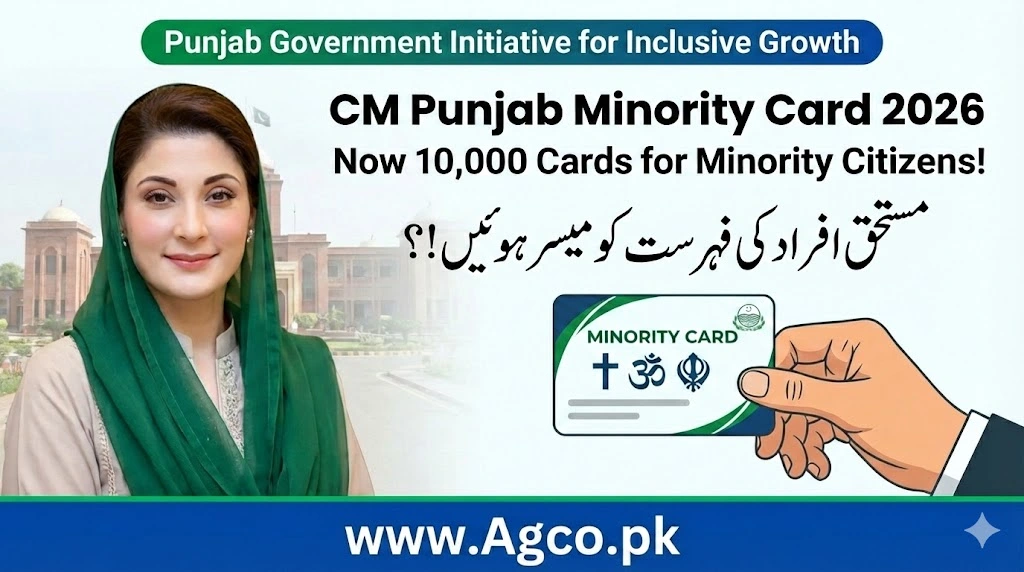
In a landmark move to promote social inclusion and economic empowerment, Chief Minister Punjab Maryam Nawaz Sharif has officially expanded the scope of the CM Punjab Minority Card 2026.
The Chief Minister announced today that the total number of cards will be increased, aiming to reach more families than ever before. This expansion ensures that thousands of deserving minority citizens across Punjab receive consistent financial support and administrative protection.
The Minority Card Program is Pakistan’s first-ever dedicated financial assistance initiative for religious minorities, including Christians, Hindus, Sikhs, and others. Under the leadership of CM Maryam Nawaz, the program has shifted from a one-time grant model to a continuous support system.
🚀 Key Update: Expansion of the Program
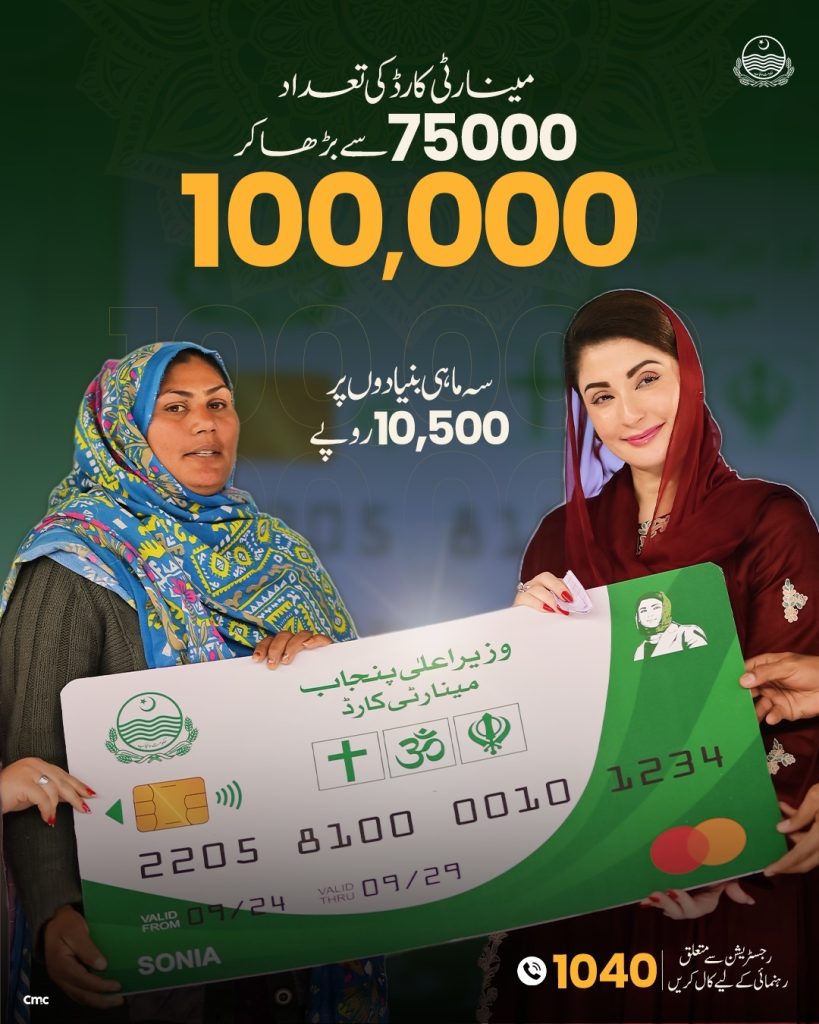
The Punjab government has taken a bold step by increasing the reach of the program. While the initial phase targeted 50,000 families, the Chief Minister has now set a target to include 75,000 to 100,000 deserving minority citizens. This means a significant number of new applicants can now benefit from the quarterly stipend and other card-related facilities.
🎯 Objectives of the Minority Card
The primary goal of this initiative is to eliminate the marginalization of minority communities by providing:
- Financial Security: A quarterly stipend to meet basic household needs.
- Social Dignity: Recognizing minorities as equal and proud citizens of Pakistan.
- Ease of Access: Seamless digital payments through the Bank of Punjab (BOP) ATMs.
📋 Eligibility Criteria for 2026
To ensure the funds reach those who need them most, the following criteria have been established:
- Religious Affiliation: Applicant must belong to a recognized minority community (Christian, Hindu, Sikh, Parsi, etc.).
- Residence: Must be a permanent resident of Punjab (verified via Domicile/CNIC).
- Income Level: Priority is given to families with a monthly income below Rs. 60,000.
- Vulnerability: Special preference for widows, orphans, and persons with disabilities (PWDs).
- Non-Beneficiary Status: Applicants should not be receiving similar large-scale benefits from other provincial schemes simultaneously.
💰 Financial Benefits & Stipend Details
| Feature | Details |
| Stipend Amount | Rs. 10,500 per quarter (Every 3 months) |
| Annual Total | Rs. 42,000 per family |
| Payment Method | Bank of Punjab ATM Card / Biometric Verification |
| Additional Grants | Increased festival grants from Rs. 10,000 to Rs. 15,000 |
📝 How to Apply for CM Punjab Minority Card 2026
The registration process is designed to be transparent and mobile-friendly. Citizens can apply through the following steps:
1. Online Registration via HR&MA Portal
Visit the official Human Rights & Minorities Affairs (HR&MA) website at hrma.punjab.gov.pk.
- Enter your 13-digit CNIC for initial verification.
- Fill out the application form with accurate family and income details.
2. Physical Registration Points
Applicants who cannot access the internet can visit the Deputy Commissioner (DC) office or designated Minority Affairs desks in their respective districts for assistance with the manual form.
3. Verification Process
Once the application is submitted:
- The data is cross-verified with NADRA and local district authorities.
- The Poverty Score (PMT) is calculated to ensure the most deserving are selected.
- Successful applicants receive an SMS alert on their registered mobile number.
⚠️ Important Documents Required
Keep these documents ready before starting your application:
- Original CNIC (Smart Card).
- Punjab Domicile.
- Proof of income (Salary slip or affidavit).
- Disability certificate (if applicable).
- Death certificate of spouse (for widows).
🏛️ Conclusion: A Step Towards Inclusive Growth
The Minority Card 2026 is more than just a financial tool; it is a shield against poverty and a symbol of the Punjab government’s commitment to “One Pakistan.” By increasing the capacity to 100,000 cards, CM Maryam Nawaz has ensured that no minority family in Punjab feels left behind.